How Emotions Connect to the Body: An Ayurvedic View of Organs and Feelings
In This Article
Read about How Emotions Connect to the Body: An Ayurvedic View of Organs and Feelings based on ancient Ayurvedic remedies and practices.
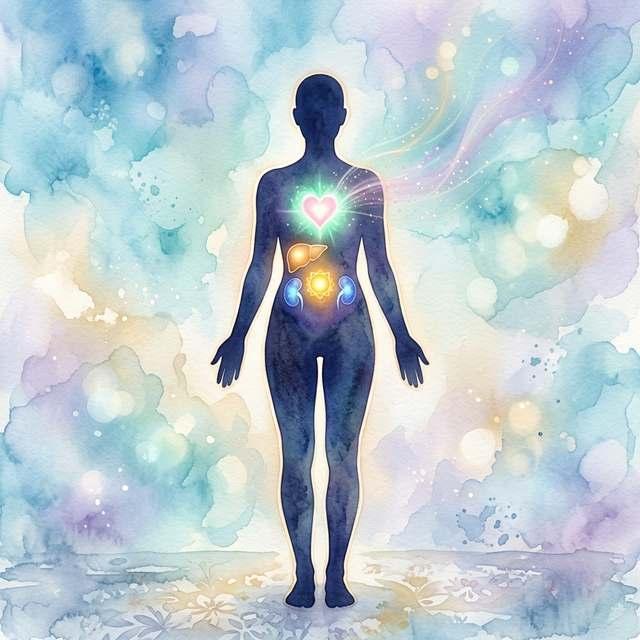
Emotions have an affinity with certain organs: grief and sadness with the lungs, anger with the liver, and hatred with the gall bladder. The kidneys may become the seat of fear, and the heart (as well as the lungs) the abode of grief and sadness. Nervousness is associated with the colon, while the stomach is the home of agitation and temptation, and the spleen may be related to attachment. As we have discussed, emotions have a physical as well as a psychological aspect.
Emotions are reactions to situations. If we do not understand and maintain clear awareness of the total movement of an emotion, from its arising to its dissolution, it will tend to adversely affect a particular organ, causing stress and weakness and creating what is known as a “defective space” (khavaigunya), where a future disease may manifest. (See this page, “How Disease Develops.”) STRESS Modern medicine often views stress as the result of a particular lifestyle, or of overwork, emotional trauma, and so on. Ayurveda considers stress less as a result or condition than as a causal factor in disease.
A regular daily routine, nourishing diet, positive emotions, and loving relationships result in strength and health. But keeping late hours, eating food that is aggravating to one’s constitution, traveling a lot, using the mind or stimulating the senses too much, repressing negative emotions such as anger or fear, and maintaining problematic relationships all put stress on the body and mind. In addition, toxins in food, water, air pollution, excessive noise, and many other environmental factors are also stressful. Stress is a major factor in many diseases.
It may trigger allergies, asthma, and herpes, and it may even lead to heart conditions. Stress disturbs the doshas and can create disequilibrium of vata, pitta, or kapha, depending on the individual’s constitution. Vata individuals may develop vata conditions such as anxiety or fearfulness. Pitta individuals may react to stress in the form of anger, or they may suffer from hypertension, peptic ulcer, ulcerative colitis, and other pitta disorders.
Kapha individuals under stress tend to eat and eat and eat. In Part III you will find many suggestions to minimize the impact of stress on your life, and to relieve symptoms caused by stress if they develop. OVERUSE, UNDERUSE, AND WRONG USE OF THE SENSES Our senses give us great pleasure as well as vital information. Through ordinary experience our senses of taste, touch, smell, sight, and hearing can nourish us, and we can also find healing through sense therapies such as aromatherapy, color therapy, mantras and other healing sounds, massage, and the tastes in herbs and foods.